BooksVol. 11Available
Is It Sadness or Depression?
What the Science Says, What to Do, and Where It Stops
by An Thanh Tùng
ASIN B0HN4LGBWN · B0HN4XWVSC
About this book
Sadness says “this is awful.” Depression says “I am awful.”Chapter 1
A plain-language, evidence-labeled guide to telling sadness from depression, what to do about it, and when to get help.
What you'll learn
- Ch. 4Grief comes in wavesDepression settles like fog. Knowing the difference changes what helps.
- Ch. 5Check the body firstBefore asking “what's wrong with my mind?”, ask “what's going on in my body?” A thyroid problem can look exactly like depression.
- Ch. 6Genes are a seed, not a sentenceFamily history raises the odds. It does not decide your future.
- Ch. 9Depression doesn't always cryIn men it often shows up as anger, drinking and reckless behavior. If you only look for tears, you will miss a great many people.
- Ch. 10Don't wait until you want toDo it, and the wanting follows. Action comes before motivation, not after.
- Ch. 14For the people beside themYou don't need to know what to say. You just need not to leave.
How the book is organized
- Part ISadness or Illness?
- Part IIWhy Does Depression Happen?
- Part IIIWhat to Do
- Part IVStaying Safe, Helping, Staying Well
Look inside
Pages from the book
- Chapter 1 opens
- Every claim carries a label
- If you remember one thing
- The evidence at a glance
- A printable worksheet
- Notes and sources
Free with your email
Worksheets from this book
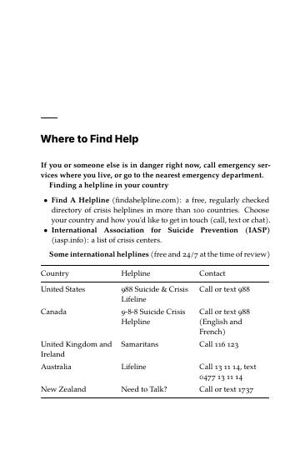
- Safety card Where to Find Help Get the PDF
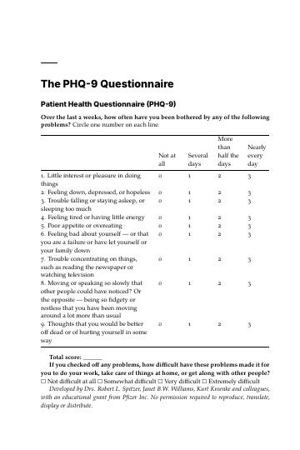
- Reference table The PHQ-9 Questionnaire Get the PDF
- Worksheet Two-Week Mood Diary Get the PDF
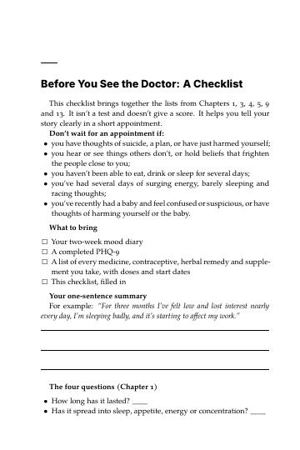
- Worksheet Before You See the Doctor: A Checklist Get the PDF
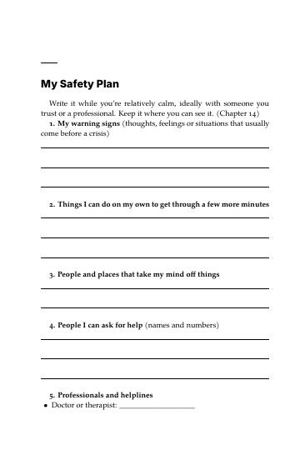
- Worksheet My Safety Plan Get the PDF
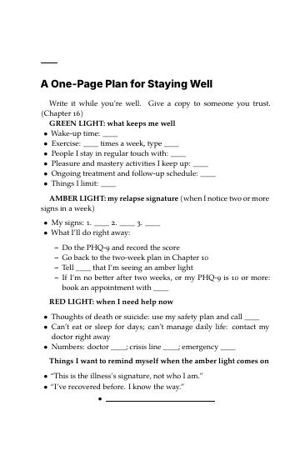
- Worksheet A One-Page Plan for Staying Well Get the PDF
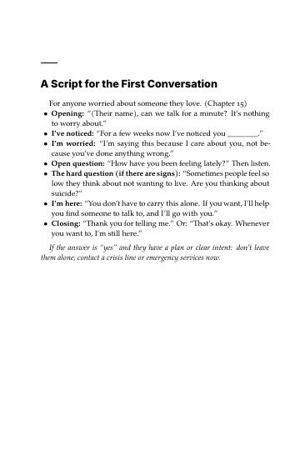
- Reference table A Script for the First Conversation Get the PDF
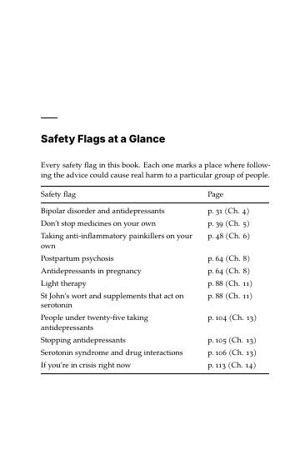
- Safety card Safety Flags at a Glance Get the PDF
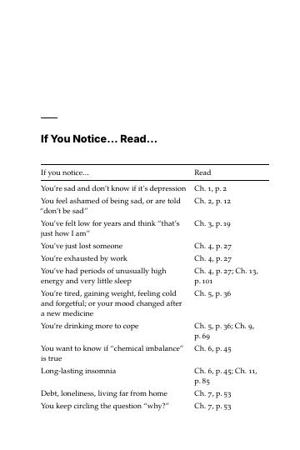
- Reference table If You Notice… Read… Get the PDF
115 references
Notes and sources
Ch. 1Is It Sadness or Depression?8
- Effective treatments exist National Institute for Health and Care Excellence (NICE). Depression in adults: treatment and management. NICE guideline NG222, June 2022. World Health Organization. Depressive disorder (depression). Fact sheet, August 29, 2025. Open Open
- How long depressive episodes last Spijker J, de Graaf R, Bijl RV, Beekman ATF, Ormel J, Nolen WA. Duration of major depressive episodes in the general population: results from the Netherlands Mental Health Survey and Incidence Study (NEMESIS). Br J Psychiatry 2002;181(3):208–213. doi:10.1192/bjp.181.3.208.
- Diagnostic criteria American Psychiatric Association. Diagnostic and Statistical Manual of Mental Disorders, Fifth Edition, Text Revision (DSM-5-TR). 2022. World Health Organization. International Classification of Diseases, 11th Revision (ICD-11), 6A70–6A71.
- Telling grief from depression Iglewicz A, Seay K, Zetumer SD, Zisook S. The removal of the bereavement exclusion in the DSM-5: exploring the evidence. Curr Psychiatry Rep 2013;15(11):413. PMID 24136623. Kavan MG, Barone EJ. Grief and major depression: controversy over changes in DSM-5 diagnostic criteria. Am Fam Physician 2014;90(10):690–694.
- Accuracy of the PHQ-2 Levis B, Sun Y, He C, et al. Accuracy of the PHQ-2 alone and in combination with the PHQ-9 for screening to detect major depression: systematic review and meta-analysis. JAMA 2020;323(22):2290–2300. PMID 32515813.
- PHQ-9 scores overestimate prevalence Levis B, Benedetti A, Ioannidis JPA, et al. Patient Health Questionnaire-9 scores do not accurately estimate depression prevalence: individual participant data meta-analysis. J Clin Epidemiol 2020;122:115–128.e1. doi:10.1016/j.jclinepi.2020.02.002.
- Accuracy of the PHQ-9 and online quizzes Levis B, Benedetti A, Thombs BD. Accuracy of Patient Health Questionnaire-9 (PHQ-9) for screening to detect major depression: individual participant data meta-analysis. BMJ 2019;365:l1476. PMID 30967483.
- The PHQ-9 and PHQ-2 Kroenke K, Spitzer RL, Williams JBW. The PHQ-9: validity of a brief depression severity measure. J Gen Intern Med 2001;16(9):606–613. PMC1495268. Kroenke K, Spitzer RL, Williams JBW. The Patient Health Questionnaire-2: validity of a two-item depression screener. Med Care 2003;41(11):1284–1292.
Ch. 2What Is Sadness For?8
- Mild sad mood and thinking Forgas JP. Don't worry, be sad! On the cognitive, motivational, and interpersonal benefits of negative mood. Curr Dir Psychol Sci 2013;22(3):225–232. doi:10.1177/0963721412474458.
- Tears and helping Zickfeld JH, van de Ven N, Pich O, et al. Tears evoke the intention to offer social support: a systematic investigation of the interpersonal effects of emotional crying across 41 countries. J Exp Soc Psychol 2021;95:104137. doi:10.1016/j.jesp.2021.104137.
- Accepting negative emotions Ford BQ, Lam P, John OP, Mauss IB. The psychological health benefits of accepting negative emotions and thoughts: laboratory, diary, and longitudinal evidence. J Pers Soc Psychol 2018;115(6):1075–1092. doi:10.1037/pspp0000157. PMC5767148.
- Suppressing emotions Gross JJ, John OP. Individual differences in two emotion regulation processes: implications for affect, relationships, and well-being. J Pers Soc Psychol 2003;85(2):348–362. PMID 12916575.
- Putting feelings into words Lieberman MD, Eisenberger NI, Crockett MJ, et al. Putting feelings into words: affect labeling disrupts amygdala activity in response to affective stimuli. Psychol Sci 2007;18(5):421–428. Torre JB, Lieberman MD. Putting feelings into words: affect labeling as implicit emotion regulation. Emotion Review 2018;10(2):116–124. Search PubMed
- Expressive writing Frattaroli J. Experimental disclosure and its moderators: a meta-analysis. Psychol Bull 2006;132(6):823–865. PMID 17073523. Guo L. The delayed, durable effect of expressive writing on depression, anxiety and stress: a meta-analytic review of studies with long-term follow-ups. Br J Clin Psychol 2023;62(1):272–297. doi:10.1111/bjc.12408.
- Medicalizing sadness Horwitz AV, Wakefield JC. The Loss of Sadness: How Psychiatry Transformed Normal Sorrow into Depressive Disorder. Oxford University Press; 2007.
- Missed and over-diagnosed depression in primary care Mitchell AJ, Vaze A, Rao S. Clinical diagnosis of depression in primary care: a meta-analysis. Lancet 2009;374(9690):609–619. PMID 19640579.
Ch. 3What Depression Really Is6
- How many people have depression World Health Organization. Depressive disorder (depression). Fact sheet, August 29, 2025. GBD 2019 Mental Disorders Collaborators. Global, regional, and national burden of 12 mental disorders in 204 countries and territories, 1990–2019. Lancet Psychiatry 2022;9(2):137–150. PMID 35026139. Open
- How few receive adequate treatment Thornicroft G, Chatterji S, Evans-Lacko S, et al. Undertreatment of people with major depressive disorder in 21 countries. Br J Psychiatry 2017;210(2):119–124. Search PubMed
- No biological test for depression DSM-5-TR (Chapter 1). NICE NG222 (Chapter 1). Ang SH, et al. The clinical utility of biomarkers in diagnosing major depressive disorder in adults: a systematic review of literature from 2013 to 2023. Eur Psychiatry 2025. doi:10.1192/j.eurpsy.2025.793. PMC12438469. The review found many candidate markers but none in routine diagnostic use. Open
- Severity and first-line treatment NICE NG222 (Chapter 1), including its visual summaries of first-line treatments for less severe and more severe depression. Open
- Recurrence Hardeveld F, Spijker J, de Graaf R, Nolen WA, Beekman ATF. Prevalence and predictors of recurrence of major depressive disorder in the adult population. Acta Psychiatr Scand 2010;122(3):184–191. Search PubMed
- Persistent depression and psychotic depression DSM-5-TR (Chapter 1). ICD-11, 6A72 and 6A70.
Ch. 4Grief, Burnout, or Something Else?10
- Grief and depression Iglewicz et al. 2013 (Chapter 1).
- Prolonged grief disorder: definitions Eisma MC. Prolonged grief disorder in ICD-11 and DSM-5-TR: challenges and controversies. Aust N Z J Psychiatry 2023;57(7):944–951. doi:10.1177/00048674231154206. PMC10291380.
- How common prolonged grief is Lundorff M, Holmgren H, Zachariae R, Farver-Vestergaard I, O'Connor M. Prevalence of prolonged grief disorder in adult bereavement: a systematic review and meta-analysis. J Affect Disord 2017;212:138–149. PMID 28167398.
- Treating prolonged grief Shear MK, Reynolds CF 3rd, Simon NM, et al. Optimizing treatment of complicated grief: a randomized clinical trial. JAMA Psychiatry 2016;73(7):685–694. doi:10.1001/jamapsychiatry.2016.0892.
- Burnout World Health Organization. Burn-out an "occupational phenomenon": International Classification of Diseases. Statement, May 2019; ICD-11 QD85. Bianchi R, Verkuilen J, Schonfeld IS, et al. Is burnout a depressive condition? A 14-sample meta-analytic and bifactor analytic study. Clin Psychol Sci 2021;9(4):579–597. doi:10.1177/2167702620979597. Koutsimani P, Montgomery A, Georganta K. The relationship between burnout, depression, and anxiety: a systematic review and meta-analysis. Front Psychol 2019.
- Adjustment disorder ICD-11, 6B43.
- Anxiety alongside depression Lamers F, van Oppen P, Comijs HC, et al. Comorbidity patterns of anxiety and depressive disorders in a large cohort study: the Netherlands Study of Depression and Anxiety (NESDA). J Clin Psychiatry 2011;72(3):341–348. Search PubMed
- Bipolar disorder mistaken for depression Hirschfeld RMA, Lewis L, Vornik LA. Perceptions and impact of bipolar disorder: how far have we really come? J Clin Psychiatry 2003;64(2):161–174.
- Antidepressants alone in bipolar disorder Viktorin A, Lichtenstein P, Thase ME, et al. The risk of switch to mania in patients with bipolar disorder during treatment with an antidepressant alone and in combination with a mood stabilizer. Am J Psychiatry 2014;171(10):1067–1073. Yatham LN, Kennedy SH, Parikh SV, et al. Canadian Network for Mood and Anxiety Treatments (CANMAT) and International Society for Bipolar Disorders (ISBD) 2018 guidelines for the management of patients with bipolar disorder. Bipolar Disord 2018;20(2):97–170. doi:10.1111/bdi.12609.
- Languishing Keyes CLM. The mental health continuum: from languishing to flourishing in life. J Health Soc Behav 2002;43(2):207–222. Search PubMed
Ch. 5When the Body Is Behind the Mood10
- Hypothyroidism and depressive symptoms Bode H, Ivens B, Bschor T, et al. Association of hypothyroidism and clinical depression: a systematic review and meta-analysis. JAMA Psychiatry 2021;78(12):1375–1383. doi:10.1001/jamapsychiatry.2021.2506. PMID 34524390. Hage MP, Azar ST. The link between thyroid function and depression. J Thyroid Res 2012;2012:590648. PMID 22220285.
- Subclinical hypothyroidism Tang R, Wang J, Yang L, et al. Subclinical hypothyroidism and depression: a systematic review and meta-analysis. Front Endocrinol 2019;10:340. PMC6558168.
- Depression after stroke Hackett ML, Pickles K. Part I: frequency of depression after stroke: an updated systematic review and meta-analysis of observational studies. Int J Stroke 2014;9(8):1017–1025. PMID 25117911.
- Alcohol and depression Fergusson DM, Boden JM, Horwood LJ. Tests of causal links between alcohol abuse or dependence and major depression. Arch Gen Psychiatry 2009;66(3):260–266. doi:10.1001/archgenpsychiatry.2008.543. Boden JM, Fergusson DM. Alcohol and depression. Addiction 2011;106(5):906–914.
- Corticosteroids Koning ACAM, van der Meulen M, Schaap D, et al. Neuropsychiatric adverse effects of synthetic glucocorticoids: a systematic review and meta-analysis. J Clin Endocrinol Metab 2024;109(6). doi:10.1210/clinem/dgad701. PMC11099480.
- Interferon alpha Udina M, Castellví P, Moreno-España J, et al. Interferon-induced depression in chronic hepatitis C: a systematic review and meta-analysis. J Clin Psychiatry 2012;73(8):1128–1138. Search PubMed
- Isotretinoin Huang YC, Cheng YC. Isotretinoin treatment for acne and risk of depression: a systematic review and meta-analysis. J Am Acad Dermatol 2017;76(6):1068–1076.e9. PMID 28291553. Li C, Chen J, Wang W, et al. Use of isotretinoin and risk of depression in patients with acne: a systematic review and meta-analysis. BMJ Open 2019;9(1):e021549.
- Hormonal contraception Skovlund CW, Mørch LS, Kessing LV, Lidegaard Ø. Association of hormonal contraception with depression. JAMA Psychiatry 2016;73(11):1154–1162.
- Blood pressure medicines Kessing LV, Rytgaard HC, Ekstrøm CT, et al. Antihypertensive drugs and risk of depression: a nationwide population-based study. Hypertension 2020;76(4). doi:10.1161/HYPERTENSIONAHA.120.15605.
- Vitamin D Okereke OI, Reynolds CF 3rd, Mischoulon D, et al. Effect of long-term vitamin D3 supplementation vs placebo on risk of depression or clinically relevant depressive symptoms and on change in mood scores: a randomized clinical trial. JAMA 2020;324(5):471–480. doi:10.1001/jama.2020.10224.
Ch. 6What Happens in the Brain and Body6
- The serotonin theory Moncrieff J, Cooper RE, Stockmann T, Amendola S, Hengartner MP, Horowitz MA. The serotonin theory of depression: a systematic umbrella review of the evidence. Mol Psychiatry 2023;28(8):3243–3256. doi:10.1038/s41380-022-01661-0. PMID 35854107. Jauhar S, Cowen PJ, Browning M, et al. A leaky umbrella has little value: evidence clearly indicates the serotonin system is implicated in depression. Mol Psychiatry 2023;28(8):3149–3152. doi:10.1038/s41380-023-02095-y.
- Genes Sullivan PF, Neale MC, Kendler KS. Genetic epidemiology of major depression: review and meta-analysis. Am J Psychiatry 2000;157(10):1552–1562. PMID 11007705. Howard DM, Adams MJ, Clarke TK, et al. Genome-wide meta-analysis of depression identifies 102 independent variants and highlights the importance of the prefrontal brain regions. Nat Neurosci 2019;22(3):343–352. PMID 30718901.
- Low-grade inflammation Osimo EF, Baxter LJ, Lewis G, Jones PB, Khandaker GM. Prevalence of low-grade inflammation in depression: a systematic review and meta-analysis of CRP levels. Psychol Med 2019;49(12):1958–1970. PMC6712955.
- Anti-inflammatory treatment Köhler-Forsberg O, Lydholm CN, Hjorthøj C, et al. Efficacy of anti-inflammatory treatment on major depressive disorder or depressive symptoms: meta-analysis of clinical trials. Acta Psychiatr Scand 2019;139(5):404–419. doi:10.1111/acps.13016.
- Bleeding risk with SSRIs and anti-inflammatory painkillers Anglin R, Yuan Y, Moayyedi P, et al. Risk of upper gastrointestinal bleeding with selective serotonin reuptake inhibitors with or without concurrent nonsteroidal anti-inflammatory use: a systematic review and meta-analysis. Am J Gastroenterol 2014;109(6):811–819. PMID 24777151.
- Insomnia and depression Baglioni C, Battagliese G, Feige B, et al. Insomnia as a predictor of depression: a meta-analytic evaluation of longitudinal epidemiological studies. J Affect Disord 2011;135(1–3):10–19. Search PubMed
Ch. 7Life, Stress, and Loneliness6
- Life events Kendler KS, Hettema JM, Butera F, Gardner CO, Prescott CA. Life event dimensions of loss, humiliation, entrapment, and danger in the prediction of onsets of major depression and generalized anxiety. Arch Gen Psychiatry 2003;60(8):789–796. PMID 12912762.
- Adverse childhood experiences Hughes K, Bellis MA, Hardcastle KA, et al. The effect of multiple adverse childhood experiences on health: a systematic review and meta-analysis. Lancet Public Health 2017;2(8):e356–e366. Search PubMed
- Having someone to confide in Choi KW, Stein MB, Nishimi KM, et al. An exposure-wide and Mendelian randomization approach to identifying modifiable factors for the prevention of depression. Am J Psychiatry 2020;177(10):944–954. Search PubMed
- Debt Richardson T, Elliott P, Roberts R. The relationship between personal unsecured debt and mental and physical health: a systematic review and meta-analysis. Clin Psychol Rev 2013;33(8):1148–1162. PMID 24121465.
- Social media Orben A, Przybylski AK. The association between adolescent well-being and digital technology use. Nat Hum Behav 2019;3:173–182. doi:10.1038/s41562-018-0506-1. Haidt J. The Anxious Generation: How the Great Rewiring of Childhood Is Causing an Epidemic of Mental Illness. New York: Penguin Press; 2024.
- Rumination Nolen-Hoeksema S. The role of rumination in depressive disorders and mixed anxiety/depressive symptoms. J Abnorm Psychol 2000;109(3):504–511. Watkins ER, Mullan E, Wingrove J, et al. Rumination-focused cognitive-behavioural therapy for residual depression: phase II randomised controlled trial. Br J Psychiatry 2011;199(4):317–322. Search PubMed
Ch. 8Hormones and Mood: Periods, Pregnancy, Menopause10
- Depression in women and around childbirth World Health Organization, depression fact sheet (Chapter 3).
- How common PMDD is Reilly TJ, Patel S, Unachukwu IC, et al. The prevalence of premenstrual dysphoric disorder: systematic review and meta-analysis. J Affect Disord 2024;349:534–540. doi:10.1016/j.jad.2024.01.066. PMID 38199397.
- SSRIs for PMDD Jespersen C, Lauritsen MP, Frokjaer VG, Schroll JB. Selective serotonin reuptake inhibitors for premenstrual syndrome and premenstrual dysphoric disorder. Cochrane Database Syst Rev 2024;8:CD001396. PMID 39140320. The review found SSRIs effective whether taken only in the second half of the cycle or every day.
- Postpartum depression NICE. Antenatal and postnatal mental health: clinical management and service guidance. CG192, 2014 (updated 2020). American College of Obstetricians and Gynecologists. Screening and diagnosis of mental health conditions during pregnancy and postpartum. Clinical Practice Guideline No. 4. Obstet Gynecol 2023;141(6). Treatment and management of mental health conditions during pregnancy and postpartum. Clinical Practice Guideline No. 5. Obstet Gynecol 2023;141(6):1262–1288. US Food and Drug Administration. FDA approves first oral treatment for postpartum depression (zuranolone). Press release, August 2023. Open
- Preventing perinatal depression US Preventive Services Task Force. Interventions to prevent perinatal depression: US Preventive Services Task Force recommendation statement. JAMA 2019;321(6):580–587. doi:10.1001/jama.2019.0007.
- Fathers Paulson JF, Bazemore SD. Prenatal and postpartum depression in fathers and its association with maternal depression: a meta-analysis. JAMA 2010;303(19):1961–1969. doi:10.1001/jama.2010.605.
- Postpartum psychosis Harlow BL, Vitonis AF, Sparen P, et al. Incidence of hospitalization for postpartum psychotic and bipolar episodes in women with and without prior prepregnancy or prenatal psychiatric hospitalizations. Arch Gen Psychiatry 2007;64(1):42–48. PMID 17199053. Bergink V, Rasgon N, Wisner KL. Postpartum psychosis: madness, mania, and melancholia in motherhood. Am J Psychiatry 2016;173(12):1179–1188.
- Risks of untreated depression in pregnancy Grote NK, Bridge JA, Gavin AR, et al. A meta-analysis of depression during pregnancy and the risk of preterm birth, low birth weight, and intrauterine growth restriction. Arch Gen Psychiatry 2010;67(10):1012–1024. Search PubMed
- Perimenopause Maki PM, Kornstein SG, Joffe H, et al. Guidelines for the evaluation and treatment of perimenopausal depression: summary and recommendations. Menopause 2018;25(10):1069–1085. doi:10.1097/GME.0000000000001174. PMID 30179986.
- The Edinburgh scale Cox JL, Holden JM, Sagovsky R. Detection of postnatal depression: development of the 10-item Edinburgh Postnatal Depression Scale. Br J Psychiatry 1987;150:782–786. Search PubMed
Ch. 9Why Doesn't My Depression Look Like Depression?5
- Suicide rates in men and women World Health Organization. Suicide worldwide in 2019: global health estimates. 2021.
- Depression in men Martin LA, Neighbors HW, Griffith DM. The experience of symptoms of depression in men vs women: analysis of the National Comorbidity Survey Replication. JAMA Psychiatry 2013;70(10):1100–1106. PMID 23986338.
- Depression in young people DSM-5-TR (Chapter 1). NICE. Depression in children and young people: identification and management. NG134, 2019. Recommends a psychological therapy, such as individual cognitive behavioral therapy, as the first treatment for moderate to severe depression in young people aged 12 to 18. Open
- Depression in later life and dementia Diniz BS, Butters MA, Albert SM, Dew MA, Reynolds CF 3rd. Late-life depression and risk of vascular dementia and Alzheimer's disease: systematic review and meta-analysis of community-based cohort studies. Br J Psychiatry 2013;202(5):329–335.
- Culture and how depression is described Ryder AG, Yang J, Zhu X, et al. The cultural shaping of depression: somatic symptoms in China, psychological symptoms in North America? J Abnorm Psychol 2008;117(2):300–313. Kleinman A. Social Origins of Distress and Disease: Depression, Neurasthenia, and Pain in Modern China. Yale University Press; 1986.
Ch. 10Where to Start: The First Two Weeks4
- Behavioral activation Richards DA, Ekers D, McMillan D, et al. Cost and Outcome of Behavioural Activation versus Cognitive Behavioural Therapy for Depression (COBRA): a randomised, controlled, non-inferiority trial. Lancet 2016;388(10047):871–880. PMC5007415. Ekers D, Webster L, Van Straten A, Cuijpers P, Richards D, Gilbody S. Behavioural activation for depression; an update of meta-analysis of effectiveness and sub group analysis. PLoS One 2014;9(6):e100100. doi:10.1371/journal.pone.0100100.
- Guided self-help Cuijpers P, Donker T, van Straten A, Li J, Andersson G. Is guided self-help as effective as face-to-face psychotherapy for depression and anxiety disorders? A systematic review and meta-analysis of comparative outcome studies. Psychol Med 2010;40(12). doi:10.1017/S0033291710000772.
- Unguided online self-help Karyotaki E, Riper H, Twisk J, et al. Efficacy of self-guided internet-based cognitive behavioral therapy in the treatment of depressive symptoms: a meta-analysis of individual participant data. JAMA Psychiatry 2017;74(4):351–359. Search PubMed
- Behavioral activation techniques Martell CR, Dimidjian S, Herman-Dunn R. Behavioral Activation for Depression: A Clinician's Guide. Guilford Press; 2010.
Ch. 11Movement, Sleep, Food, Light, and Supplements7
- Exercise Noetel M, Sanders T, Gallardo-Gómez D, et al. Effect of exercise for depression: systematic review and network meta-analysis of randomised controlled trials. BMJ 2024;384:e075847 (correction May 2024). Search PubMed
- Treating insomnia to prevent depression Irwin MR, Carrillo C, Sadeghi N, et al. Prevention of incident and recurrent major depression in older adults with insomnia: a randomized clinical trial. JAMA Psychiatry 2022;79(1):33–41. Search PubMed
- Diet Jacka FN, O'Neil A, Opie R, et al. A randomised controlled trial of dietary improvement for adults with major depression (the "SMILES" trial). BMC Med 2017;15:23. Search PubMed
- Light therapy Golden RN, Gaynes BN, Ekstrom RD, et al. The efficacy of light therapy in the treatment of mood disorders: a review and meta-analysis of the evidence. Am J Psychiatry 2005;162(4):656–662. Search PubMed
- St John's wort Linde K, Berner MM, Kriston L. St John's wort for major depression. Cochrane Database Syst Rev 2008;(4):CD000448. National Center for Complementary and Integrative Health. St. John's wort and depression: in depth. Fact sheet. National Institute of Diabetes and Digestive and Kidney Diseases. St. John's wort. In: LiverTox: Clinical and Research Information on Drug-Induced Liver Injury. NCBI Bookshelf NBK548880. Open Open
- Omega-3 Appleton KM, Voyias PD, Sallis HM, et al. Omega-3 fatty acids for depression in adults. Cochrane Database Syst Rev 2021;11:CD004692. PMID 34817851.
- Saffron Marx W, Lane M, Rocks T, et al. Effect of saffron supplementation on symptoms of depression and anxiety: a systematic review and meta-analysis. Nutr Rev 2019;77(8):557–571. PMID 31135916.
Ch. 12Talking Therapies: What Works and How to Find One6
- Structured therapies compared Cuijpers P, van Straten A, Andersson G, van Oppen P. Psychotherapy for depression in adults: a meta-analysis of comparative outcome studies. J Consult Clin Psychol 2008;76(6):909–922. Search PubMed
- Publication bias Cuijpers P, Smit F, Bohlmeijer E, Hollon SD, Andersson G. Efficacy of cognitive-behavioural therapy and other psychological treatments for adult depression: meta-analytic study of publication bias. Br J Psychiatry 2010;196(3):173–178. PMID 20194536.
- Combining therapy and medication Cuijpers P, Sijbrandij M, Koole SL, Andersson G, Beekman AT, Reynolds CF 3rd. Adding psychotherapy to antidepressant medication in depression and anxiety disorders: a meta-analysis. World Psychiatry 2014;13(1):56–67. PMID 24497254.
- The Friendship Bench Chibanda D, Weiss HA, Verhey R, et al. Effect of a primary care–based psychological intervention on symptoms of common mental disorders in Zimbabwe: a randomized clinical trial. JAMA 2016;316(24). doi:10.1001/jama.2016.19102.
- Phone apps Linardon J, Cuijpers P, Carlbring P, Messer M, Fuller-Tyszkiewicz M. The efficacy of app-supported smartphone interventions for mental health problems: a meta-analysis of randomized controlled trials. World Psychiatry 2019;18(3):325–336. Search PubMed
- The therapeutic alliance Flückiger C, Del Re AC, Wampold BE, Horvath AO. The alliance in adult psychotherapy: a meta-analytic synthesis. Psychotherapy 2018;55(4):316–340. PMID 29792475.
Ch. 13Antidepressants and Other Medical Treatments13
- Antidepressants compared with placebo Cipriani A, Furukawa TA, Salanti G, et al. Comparative efficacy and acceptability of 21 antidepressant drugs for the acute treatment of adults with major depressive disorder: a systematic review and network meta-analysis. Lancet 2018;391(10128):1357–1366. Search PubMed
- Average effect and substantial responders Stone MB, Yaseen ZS, Miller BJ, Richardville K, Kalaria SN, Kirsch I. Response to acute monotherapy for major depressive disorder in randomized, placebo controlled trials submitted to the US Food and Drug Administration: individual participant data analysis. BMJ 2022;378:e067606. PMID 35918097.
- Severity and antidepressant effect Fournier JC, DeRubeis RJ, Hollon SD, et al. Antidepressant drug effects and depression severity: a patient-level meta-analysis. JAMA 2010;303(1):47–53. Furukawa TA, Maruo K, Noma H, et al. Initial severity of major depression and efficacy of new generation antidepressants: individual participant data meta-analysis. Acta Psychiatr Scand 2018. Search PubMed
- The under-25 warning US Food and Drug Administration. FDA proposes new warnings about suicidal thinking, behavior in young adults who take antidepressant medications. News release, May 2, 2007.
- Continuing treatment Geddes JR, Carney SM, Davies C, et al. Relapse prevention with antidepressant drug treatment in depressive disorders: a systematic review. Lancet 2003;361(9358):653–661. Search PubMed
- Discontinuation symptoms Henssler J, Schmidt Y, Schmidt U, Schwarzer G, Bschor T, Baethge C. Incidence of antidepressant discontinuation symptoms: a systematic review and meta-analysis. Lancet Psychiatry 2024;11(7):526–535. Search PubMed
- Tapering Horowitz MA, Taylor D. Tapering of SSRI treatment to mitigate withdrawal symptoms. Lancet Psychiatry 2019;6(6):538–546. Royal College of Psychiatrists. Stopping antidepressants. Patient information resource, September 2020. Open
- Serotonin syndrome and other side effects Boyer EW, Shannon M. The serotonin syndrome. N Engl J Med 2005;352(11):1112–1120. Search PubMed
- ECT UK ECT Review Group. Efficacy and safety of electroconvulsive therapy in depressive disorders: a systematic review and meta-analysis. Lancet 2003;361(9360):799–808. PMID 12642045.
- TMS Brunoni AR, Chaimani A, Moffa AH, et al. Repetitive transcranial magnetic stimulation for the acute treatment of major depressive episodes: a systematic review with network meta-analysis. JAMA Psychiatry 2017;74(2):143–152. doi:10.1001/jamapsychiatry.2016.3644.
- Esketamine US Food and Drug Administration. FDA approves new nasal spray medication for treatment-resistant depression. Press release, March 2019.
- Psilocybin Goodwin GM, Aaronson ST, Alvarez O, et al. Single-dose psilocybin for a treatment-resistant episode of major depression. N Engl J Med 2022;387(18):1637–1648. Search PubMed
- Microdosing Szigeti B, Kartner L, Blemings A, et al. Self-blinding citizen science to explore psychedelic microdosing. eLife 2021;10:e62878. doi:10.7554/eLife.62878.
Ch. 14When You Think About Dying7
- Safe reporting World Health Organization. Preventing suicide: a resource for media professionals. Update 2023. Geneva: WHO; 2023. ISBN 9789240076846. World Health Organization. LIVE LIFE: an implementation guide for suicide prevention in countries. 2021. Open
- Brief crises Simon TR, Swann AC, Powell KE, Potter LB, Kresnow MJ, O'Carroll PW. Characteristics of impulsive suicide attempts and attempters. Suicide Life Threat Behav 2001;32(1 Suppl):49–59. Search PubMed
- People kept safe through a crisis Seiden RH. Where are they now? A follow-up study of suicide attempters from the Golden Gate Bridge. Suicide Life Threat Behav 1978;8(4):203–216. Owens D, Horrocks J, House A. Fatal and non-fatal repetition of self-harm: systematic review. Br J Psychiatry 2002;181(3):193–199. Search PubMed
- Restricting access to means Zalsman G, Hawton K, Wasserman D, et al. Suicide prevention strategies revisited: 10-year systematic review. Lancet Psychiatry 2016;3(7):646–659. PMID 27289303. Hawton K, Bergen H, Simkin S, et al. Long term effect of reduced pack sizes of paracetamol on poisoning deaths and liver transplant activity in England and Wales: interrupted time series analyses. BMJ 2013;346:f403.
- Safety planning Stanley B, Brown GK, Brenner LA, et al. Comparison of the safety planning intervention with follow-up vs usual care of suicidal patients treated in the emergency department. JAMA Psychiatry 2018;75(9):894–900. Stanley B, Brown GK. Safety planning intervention: a brief intervention to mitigate suicide risk. Cogn Behav Pract 2012;19(2):256–264. Search PubMed
- Caring letters Motto JA, Bostrom AG. A randomized controlled trial of postcrisis suicide prevention. Psychiatr Serv 2001;52(6):828–833. Search PubMed
- The Papageno effect Niederkrotenthaler T, Voracek M, Herberth A, et al. Role of media reports in completed and prevented suicide: Werther v. Papageno effects. Br J Psychiatry 2010;197(3):234–243. Search PubMed
Ch. 15When Someone You Love Is Depressed4
- Asking about suicide Dazzi T, Gribble R, Wessely S, Fear NT. Does asking about suicide and related behaviours induce suicidal ideation? What is the evidence? Psychol Med 2014;44(16):3361–3363. PMID 24998511.
- Criticism in families Butzlaff RL, Hooley JM. Expressed emotion and psychiatric relapse: a meta-analysis. Arch Gen Psychiatry 1998;55(6):547–552. Mazza C, Formica F, Ferracuti S, et al. High expressed emotion (HEE), assessed using the Five-Minute Speech Sample (FMSS), as a predictor of psychiatric relapse in patients with schizophrenia and major depressive disorder: a meta-analysis and meta-regression. J Clin Med 2022;11(21):6533. doi:10.3390/jcm11216533. PMC9658267.
- Mental Health First Aid Morgan AJ, Ross A, Reavley NJ. Systematic review and meta-analysis of Mental Health First Aid training: effects on knowledge, stigma, and helping behaviour. PLoS One 2018;13(5):e0197102. PMC5979014.
- Caregiver burden del-Pino-Casado R, Rodríguez Cardosa M, López-Martínez C, Orgeta V. The association between subjective caregiver burden and depressive symptoms in carers of older relatives: a systematic review and meta-analysis. PLoS One 2019;14(5):e0217648. PMC6541277.
Ch. 16Staying Well: Your Plan4
- Leftover symptoms Judd LL, Akiskal HS, Maser JD, et al. Major depressive disorder: a prospective study of residual subthreshold depressive symptoms as predictor of rapid relapse. J Affect Disord 1998;50(2–3):97–108. PMID 9858069.
- Continuing treatment Geddes et al. 2003 (Chapter 13).
- Mindfulness-based cognitive therapy Kuyken W, Warren FC, Taylor RS, et al. Efficacy of mindfulness-based cognitive therapy in prevention of depressive relapse: an individual patient data meta-analysis from randomized trials. JAMA Psychiatry 2016;73(6):565–574. PMID 27119968.
- MBCT compared with staying on medication Kuyken W, Hayes R, Barrett B, et al. Effectiveness and cost-effectiveness of mindfulness-based cognitive therapy compared with maintenance antidepressant treatment in the prevention of depressive relapse or recurrence (PREVENT): a randomised controlled trial. Lancet 2015;386(9988):63–73. Search PubMed
BackQuestionnaires at the back of the book1
- PHQ-9 Kroenke, Spitzer and Williams 2001 (Chapter 1). Severity bands from the same source.
Updates and corrections
Evidence last reviewed October 12, 2026
Each evidence label shows how solid the evidence was on the day it was last reviewed. Corrections are posted here with the date they were made, and included in the next printing.
No corrections have been posted for this edition. Spotted an error, or a study that should change a label? Email hello@yourbodydecoded.org